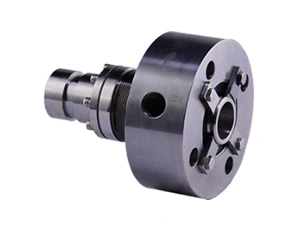
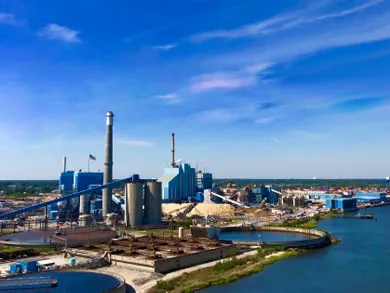
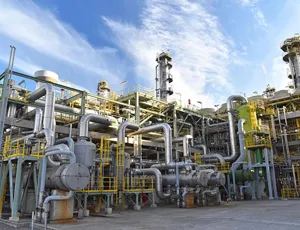
Chemical new materials encompass high-end fields such as high-performance resins, specialty fibers, composite materials, polyurethanes, organosilicones, and electronic chemicals. Their production processes commonly involve extreme conditions such as high temperature and pressure, strong corrosion, high vacuum, solid and dusty environments, and flammable and explosive media, placing extremely high demands on the reliability, environmental friendliness, and long-term operational stability of seals. Traditional seals are prone to wear, leakage, and corrosion by the media, frequently resulting in failures, shutdowns, and excessive leakage, severely hindering the continuous and safe production of high-end new materials. Ferrofluid seals (magnetic fluid seals), with their core advantages of non-contact zero wear, absolute zero leakage, strong corrosion resistance, pollution resistance, and long lifespan, fundamentally address the industry's sealing pain points, becoming the ideal sealing solution for high-end equipment in the chemical new materials sector.
Sealing Challenges
1. Severe Erosion Caused by Highly Corrosive Media
Production involves highly corrosive media such as strong acids, strong alkalis, organic solvents, halogens, phenols, and esters. Traditional sealing materials are prone to swelling, cracking, and aging, resulting in short seal life and high leakage risk.
2. Large Fluctuations in High Temperature, High Pressure, and High Vacuum Conditions
Processes such as polymerization, condensation, distillation, and modification involve large temperature ranges and drastic pressure changes. Traditional seals are prone to thermal deformation and pressure imbalance, making it difficult to maintain stable vacuum levels, affecting product purity and yield.
3. Wear and Clogging from Solid- and Dust-Laden Multiphase Flow
The synthesis, granulation, crushing, and drying processes generate large amounts of dust and have high solids content in the slurry. Traditional seal faces and spring structures are easily scratched and clogged by particles, resulting in a high failure rate.
4. Significant Pressure from Continuous Production and Environmental Compliance
New material production lines require large investments and have high continuity requirements. Seal failure can easily lead to the scrapping of the entire batch. Fugitive emissions of VOCs and toxic gases are subject to strict regulation, and traditional seals struggle to achieve long-term zero leakage.
Solutions
1. Specialized Corrosion-Resistant Formula: Withstands Medium Erosion at the Material Level
Utilizing a specialized carrier liquid system resistant to acids, alkalis, and organic solvents, it exhibits extremely high chemical stability, does not react with various new chemical media, and does not swell, decompose, or volatilize. Combined with corrosion-resistant electrode shoes and an isolation structure, its inherent properties prevent corrosion failure, achieving long-term stable sealing.
2. Multi-Stage Pole-Tooth Vacuum Sealing Structure: Adaptable to High Temperature, High Pressure, and Wide Operating Conditions
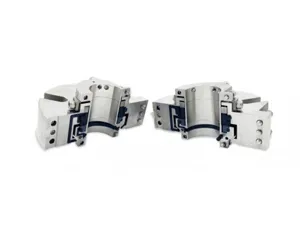
Relying on a magnetic field to form multi-stage "liquid O-rings," it operates without contact or friction, remaining wear-free and deformation-free under alternating high temperature, high pressure, and high vacuum environments. It stably adapts to a wide temperature range and high pressure requirements, ensuring stable vacuum levels in reactors, distillation columns, and polymerization units, improving product consistency and production efficiency.
3. Dust and Solid Resistant Design, Completely Solving Wear and Blockage Problems
The ferrofluid seal (magnetic fluid seal) itself has no friction pairs or spring structure, eliminating the risk of jamming and seizing. Combined with a front-mounted spiral dust barrier and nitrogen curtain isolation, dust and solid particles are difficult to enter the sealing area. Even if trace impurities enter, they will be entrained and suspended, preventing scratches on the shaft and pole shoes, fundamentally solving the problem of seal failure in solid-containing conditions.
4. Absolute Zero Leakage + Long Lifespan, Meeting Continuous Production and Environmental Requirements
The ferrofluid seal (magnetic fluid seal) operates without wear or leakage channels, achieving long-term absolute zero leakage. It effectively controls the emission of VOCs and toxic media, meeting environmental compliance requirements. Under normal operating conditions, its service life can reach more than 2 years, requiring no daily maintenance, significantly reducing downtime for repairs, and ensuring high-load continuous operation of the production line.
① Core Application Scenarios
Application Scenarios: Primarily used in core processes such as specialty resin/engineering plastic polymerization, specialty rubber synthesis, high-performance fiber spinning, functional membrane material preparation, electronic chemical purification, and bio-based material synthesis. Core equipment includes high-pressure polymerization reactors, stirrers, rotary shafts, distillation columns, vacuum drying equipment, extruders, spinning equipment, and other critical sealing components. Key pain points:
• Complex and specialized media, involving highly corrosive monomers, organic solvents, easily self-polymerizing materials, and flammable and explosive chemicals. Traditional sealing materials are easily corroded, swollen, aged, or clogged by material coking, leading to rapid failure.
• Extremely harsh operating conditions: Polymerization reactions often involve high pressure, high temperature, and high vacuum, with large fluctuations in operating conditions. Traditional seals are prone to clearance changes, wear, and leakage, leading to uncontrolled reactions.
• High product performance requirements: Even minor air leaks or ingress of impurities can affect polymer molecular weight and product performance, resulting in batch defects or even the scrapping of the entire reactor contents.
• High requirements for continuous production: New material equipment often operates continuously. Traditional seals require frequent shutdowns for maintenance and replacement, resulting in significant losses from unplanned shutdowns and impacting batch stability.
• Strict environmental and safety controls: Leaks of specialty chemicals can easily cause safety accidents and exceed environmental standards, necessitating extremely high requirements for zero-leakage and high reliability seals.
② Product Highlights
• Zero Leakage and High Reliability: A customized magnetic liquid formula is designed for the special operating conditions of new chemical materials, achieving absolute zero leakage. This completely eliminates the risk of reaction runaway, product non-conformance, and safety and environmental issues caused by media leakage and the intrusion of external air, ensuring batch-to-batch stability.
• Strong Adaptability to Extreme Conditions: A wide temperature range and pressure resistance from high vacuum to 2.5MPa perfectly adapt to the extreme scenarios of polymerization reactions involving ultra-high pressure, high temperature, high vacuum, and large fluctuations in operating conditions. Sealing performance remains stable and undiminished over the long term.
• Strong Corrosion Resistance and Coking Resistance: A customized magnetic liquid formula and sealing structure resistant to strong corrosion and coking can withstand special monomers, highly corrosive media, and easily self-polymerizing materials for extended periods, solving the pain points of traditional seals such as easy corrosion, coking blockage, and rapid failure.
• Long-Term Maintenance-Free Operation: A flexible contact sealing structure with zero friction and zero wear allows for continuous maintenance-free equipment operation. Frequent shutdowns for seal replacement are unnecessary, significantly reducing unplanned downtime losses and ensuring continuous and stable operation of the equipment.
• Significant cost reduction and efficiency improvement: Significantly reduces manpower and material resources required for seal procurement and replacement, and equipment maintenance, while eliminating huge losses caused by material leakage and batch scrapping. Long-term operation can reduce enterprises' overall sealing-related costs by more than 35%;
• Full-scenario customization: Customized sealing solutions can be tailored to the different processes, operating conditions, and equipment specifications of new material enterprises, adapting to applications across all scenarios from laboratory pilot-scale and pilot-scale to to 10,000-ton large-scale production facilities.
 English
  français
  Español
  العربية
  русский