Difference between Dry Gas Seal and Ordinary Mechanical Seal
Ordinary Mechanical Seal
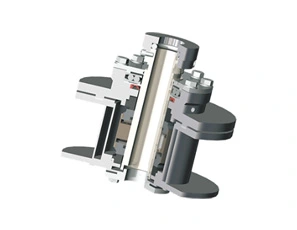
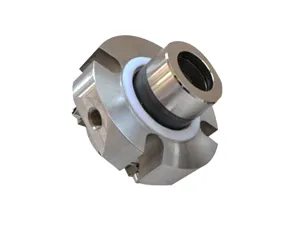
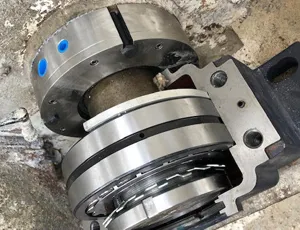
Ordinary mechanical seals generally used in pumps are mainly used to transport liquids, which can provide lubrication and cooling. However, if the liquid is liquefied gas, which is particularly easy to volatilize, or is simply pure gas, then the lubrication and cooling effect cannot be achieved.
If the ordinary mechanical seal is used in a rotating state, it will be a dry friction state, and the sealing surface and auxiliary sealing ring will quickly overheat and damage. In order to solve the problems caused by the above-mentioned ordinary mechanical seals, dry gas seals should be used.
Advantages of Dry Gas Seal
Non-contact
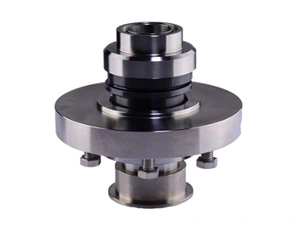
Dry gas seal is a non-contact seal, so requires less frequent maintenance than mechanical seals.
Micron air film gap
When the machine is running, a 3-10 micron air film gap will be formed between the dynamic ring and the static ring sealing surface of the dry gas seal.
Environmental protection
Dry gas seal minimizes emissions and avoids contamination of process media, which is ideal for applications with strict environmental regulations.
Wide applicability
Dry gas seal is ideal for high-speed and high-pressure applications, widely used in the oil and gas industry, chemical processing, and pharmaceutical industries.
Core Advantages of Dry Gas Seals
Non‑Contacting Design – Low Friction & Low Wear
The most significant breakthrough of dry gas seals lies in their non‑contacting operating principle. During equipment operation, a microscopic gap is always maintained between the rotating and stationary seal faces, completely eliminating the direct contact friction found in conventional mechanical seals. As a result, frictional heat generation is greatly reduced, and wear is significantly slowed.
Compared with ordinary mechanical seals, the service life of dry gas seals is typically extended by 3 to 5 times or even more. Because there is no solid‑to‑solid contact, issues such as scoring or thermal cracking do not occur. This greatly improves the continuous operational reliability of equipment and reduces unplanned shutdowns caused by seal failure.
Micron‑Scale Gas Film – Highly Efficient Sealing
At high rotational speeds, dry gas seals rely on a special spiral groove pattern on the rotating face to pump sealing gas between the end faces, forming a stable gas film only 3–10 µm thick.
This gas film effectively blocks the process medium from leaking out while simultaneously providing excellent cooling and lubrication, enabling true “dry” seal operation. Compared to liquid‑lubricated mechanical seals, dry gas seals perform far better in gas media applications, particularly at high rotational speeds (upwards of 20,000 rpm) and under high pressure. In addition, they significantly reduce seal power consumption—typically only 5–10% of that of contacting seals.
Environmentally Friendly with Low Leakage – Meets Stringent Regulatory Requirements
Against the backdrop of increasingly stringent environmental regulations, dry gas seals offer clear advantages. They keep medium leakage extremely low, far superior to traditional mechanical seals, and easily meet international standards such as API 682 and ISO 14001 as well as increasingly strict domestic VOCs emission requirements.
These seals are especially suitable for leakage‑sensitive industries such as oil & gas, chemicals, and pharmaceuticals. They effectively reduce the escape of harmful gases (methane, ammonia, hydrogen sulfide, etc.), enabling near‑zero emissions. This helps enterprises lower the risk of environmental penalties while enhancing their green image.
Outstanding Performance at High Speed and High Pressure
Dry gas seals are specifically designed for high‑speed rotating machinery, performing exceptionally well in critical equipment such as centrifugal compressors, turbo‑expanders, and turbomachinery. They can reliably withstand extremely high rotational speeds and system pressures that would typically cause problems like face burning or spring failure in traditional contacting mechanical seals under such extreme conditions.
Advantages of Zhaoqiang's Dry Gas Seal
Durability
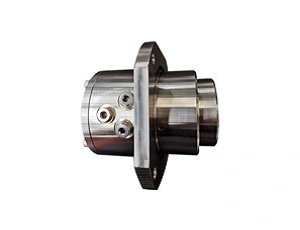
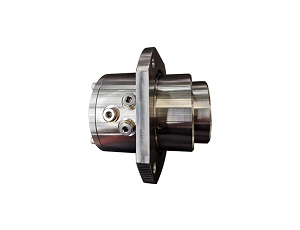
Zhaoqiang's dry gas seals require no liquid or additional magnets, have a simple and compact structure, and operate without friction. The non-contact gas film solves the wear and leakage problems associated with mechanical seals, while achieving cooling effects and long service life.
Customization
Zhaoqiang's dry gas seals can be customized with multiple tandem sealing stages to enhance sealing performance. A variety of sizes and mounting configurations are also available to meet the equipment needs of various industries.
In summary, as one of the professional dry gas seal manufacturers, Zhaoqiang's dry gas seals provide reliable, maintenance-free and environmentally friendly sealing, which is an ideal solution for high-speed rotating machinery.
Winnie Xu
I'm Winnie Xu, serving as the Foreign Trade Manager at Zigong Zhaoqiang Sealing Products Industrial Co., Ltd. It has been six years since I entered the mechanical seal industry, and during these years, I have developed a profound passion for it.
Over the past six years, I have had the privilege of helping more than 200 clients from 30 countries resolve their sealing problems, which gives me a strong sense of accomplishment.
What's more, I'm keen on writing down the experience we've gained over the years and sharing knowledge related to the mechanical seal industry. I hope that these shared insights can be beneficial to those in need.
 English
  français
  Español
  العربية
  русский