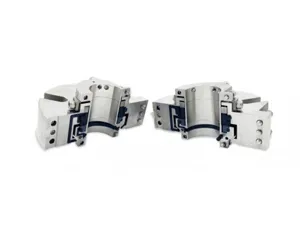
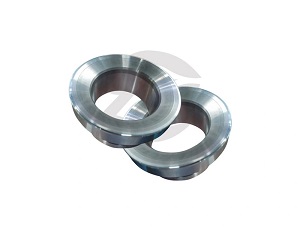
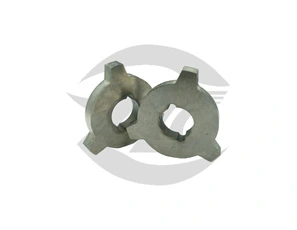
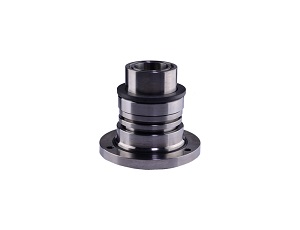
In modern high-precision equipment, gas bearings and gas seals are applied to achieve frictionless motion and zero-leakage performance. Dry gas seals are engineered for pumps, compressors, and turbines across oil & gas, petrochemical, and power generation sectors. Engineers and operators who grasp the working principle of dry gas seal can optimize system efficiency while avoiding costly downtime.
Introduction to Dry Gas Seal
A dry gas seal is a new type of non-contact shaft seal. The concept of dry gas seal was developed in the late 1960s based on gas-lubricated bearings, among which the spiral groove seal is the most typical. After several years of research, John Crane Company of the United States took the lead in launching dry gas seal products and put them into industrial use.
Dry Gas Seal Working Principle
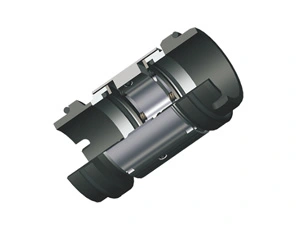
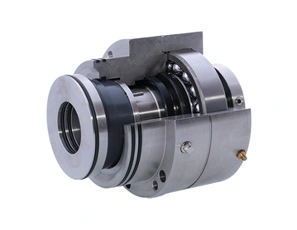
Understanding the working principle of dry gas seal is essential for ensuring the reliability and safety of modern rotating equipment. Compared with other mechanical seals, dry gas seals are basically the same in structure. The main difference is that a sealing ring of a dry gas seal is machined with evenly distributed shallow grooves. The dry gas seal can operate in a non-contact state by relying on the fluid dynamic pressure effect generated by these shallow grooves during operation to separate the sealing surfaces. Whether you need OEM replacements or bespoke sealing systems, our reputation as one of the leading dry gas seal manufacturers guarantees performance you can trust.
For a spiral groove dry gas seal, its working principle is to rely on the balance between fluid static pressure, spring force, and fluid dynamic pressure. When the sealing gas is injected into the sealing device, the dynamic and static rings are subjected to the static pressure of the fluid. The dynamic pressure of the fluid is only generated when it rotates. When the moving ring rotates with the shaft, the gas in the spiral groove is sheared and flows from the outer edge to the center, generating dynamic pressure, and the sealing weir has an inhibitory effect on the outflow of gas, which hinders the gas flow and increases the gas pressure. This increased pressure separates the flexibly installed static ring from the matching moving ring. When the gas pressure and the spring force are restored to balance, a minimum gap is maintained to form a gas film with a film thickness of generally 3-5μm, so that the rotating ring and the stationary ring are out of contact, so that the end face is almost free of wear, and the process gas is sealed at the same time.
Application and Prospects of Dry Gas Seal
Practice shows that dry gas seals are superior to ordinary contact mechanical seals in many aspects. They are mainly used in pipelines, offshore platforms, refineries, petrochemical industries, etc., and are suitable for any gas transportation system. Since dry gas seals are non-contact seals and are basically not limited by PV values, dry gas seals are particularly suitable as shaft seals for large centrifugal compressors under high-speed and high-pressure conditions.
The emergence of Zhaoqiang's dry gas seals is a revolution in sealing technology. The problem of gas sealing has been solved and is no longer restricted by sealing lubricating oil. Moreover, the gas control system required is much simpler than the oil system of oil film seals.
In addition, the emergence of dry gas seals has also changed the traditional sealing concept. It organically combines dry gas sealing technology with the principle of blocking seals. The new concept of "using gas sealing liquid or gas sealing gas" replaces the traditional concept of "liquid sealing gas or liquid sealing liquid", which can ensure that any sealing medium can achieve zero leakage. This makes dry gas seals have a wide range of application prospects in the field of pump shaft seals.
Winnie Xu
I'm Winnie Xu, serving as the Foreign Trade Manager at Zigong Zhaoqiang Sealing Products Industrial Co., Ltd. It has been six years since I entered the mechanical seal industry, and during these years, I have developed a profound passion for it.
Over the past six years, I have had the privilege of helping more than 200 clients from 30 countries resolve their sealing problems, which gives me a strong sense of accomplishment.
What's more, I'm keen on writing down the experience we've gained over the years and sharing knowledge related to the mechanical seal industry. I hope that these shared insights can be beneficial to those in need.
 English
  français
  Español
  العربية
  русский