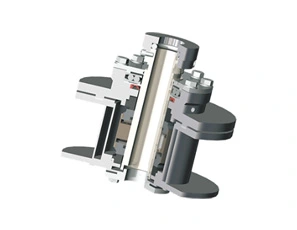
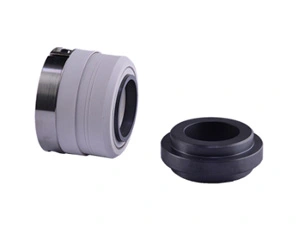
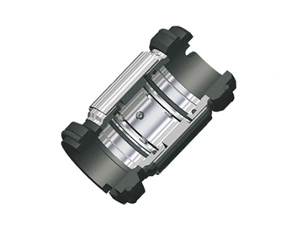
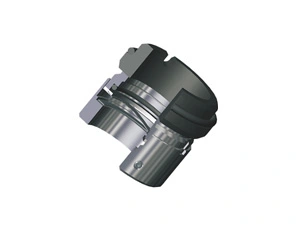
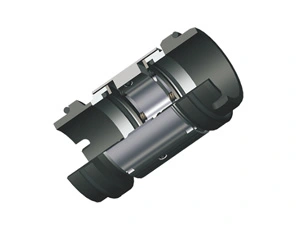
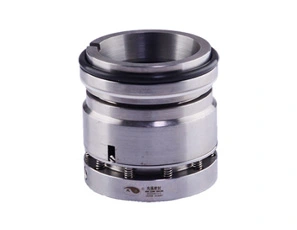
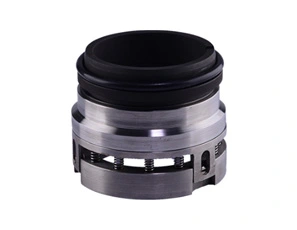
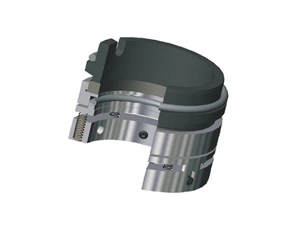
In industrial applications, particularly in pumps and valves, the choice between packing seals and mechanical seals is crucial for ensuring efficient, reliable, and safe operations. Both types of seals serve the purpose of preventing leaks and maintaining the integrity of systems, but they differ significantly in design, performance, and suitability for various applications.
Packing Seals
Packing seals, also known as gland or stuffing box packing, consist of soft, pliable material (often graphite, PTFE, or other fibrous composites) that is packed into an annular space around the shaft where it exits the casing. This material is compressed to form a tight seal that prevents fluid from leaking along the shaft.
Cost-Effective: Generally less expensive both in initial cost and in maintenance.
Simplicity: Easier to install and maintain. Can often be adjusted or repacked without disassembling the equipment.
Flexibility: Effective in applications with abrasive or viscous fluids, as the packing material can be selected to suit specific conditions.
Higher Friction: Can result in greater wear and tear on the shaft and increased energy consumption due to friction.
Regular Maintenance Required: Needs periodic adjustments and replacements to maintain effectiveness and prevent leaks.
Less Precision: Does not provide as tight a seal as mechanical seals, which can lead to higher leakage rates.
Applications: Packing seals are commonly used in applications where the operating conditions are less severe and where slight leakage is not critical, such as in water pumps, certain chemical processes, and low-pressure applications.
Mechanical Seals
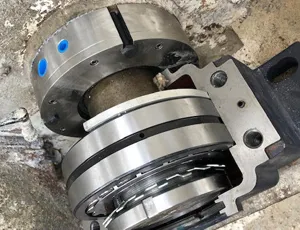
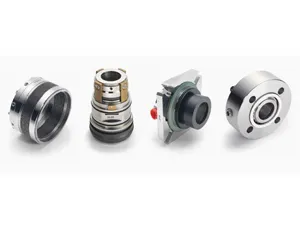
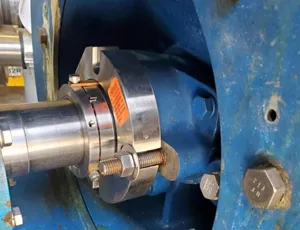
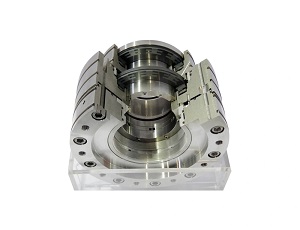
Industrial mechanical seals consist of two precisely machined faces, one stationary and one rotating against each other, to form a tight seal. These faces are often made from durable materials like silicon carbide or tungsten carbide and are lubricated by the fluid being pumped or an external source.
Highly Effective Sealing: General seals provide a much tighter seal compared to packing seals, with minimal leakage.
Lower Friction: Results in less wear on the shaft and lower energy consumption.
Durability: Designed to handle higher pressures and temperatures, and suitable for handling hazardous or volatile fluids.
Higher Initial Cost: More expensive to purchase and install due to their complexity.
Complex Maintenance: Requires specialized knowledge for installation and maintenance.
Sensitivity: More sensitive to misalignment and improper handling.
Applications: Industrial mechanical seals are preferred in high-pressure, high-temperature environments, and where leakage of hazardous materials must be strictly controlled. These automotive shaft seals are widely used in the oil and gas industry, chemical processing, and pharmaceuticals.
The decision between packing seals and mechanical seals depends on several factors, including the nature of the application, fluid characteristics, operating conditions, maintenance capabilities, and budget constraints. Packing seals offer a cost-effective solution for less demanding conditions, while industrial mechanical seals provide superior performance and reliability in more critical applications.
 English
  français
  Español
  العربية
  русский